
Why You Will Never Take Photos Like Joakim Karlsson (And That Is Okay)
I remember the first time I saw a Joakim Karlsson photo. It was on Instagram, back when I had just started photographing models myself. I was still figuring things out, playing with lighting, testing different styles, seeing what worked and what did not.
And then I saw his work.
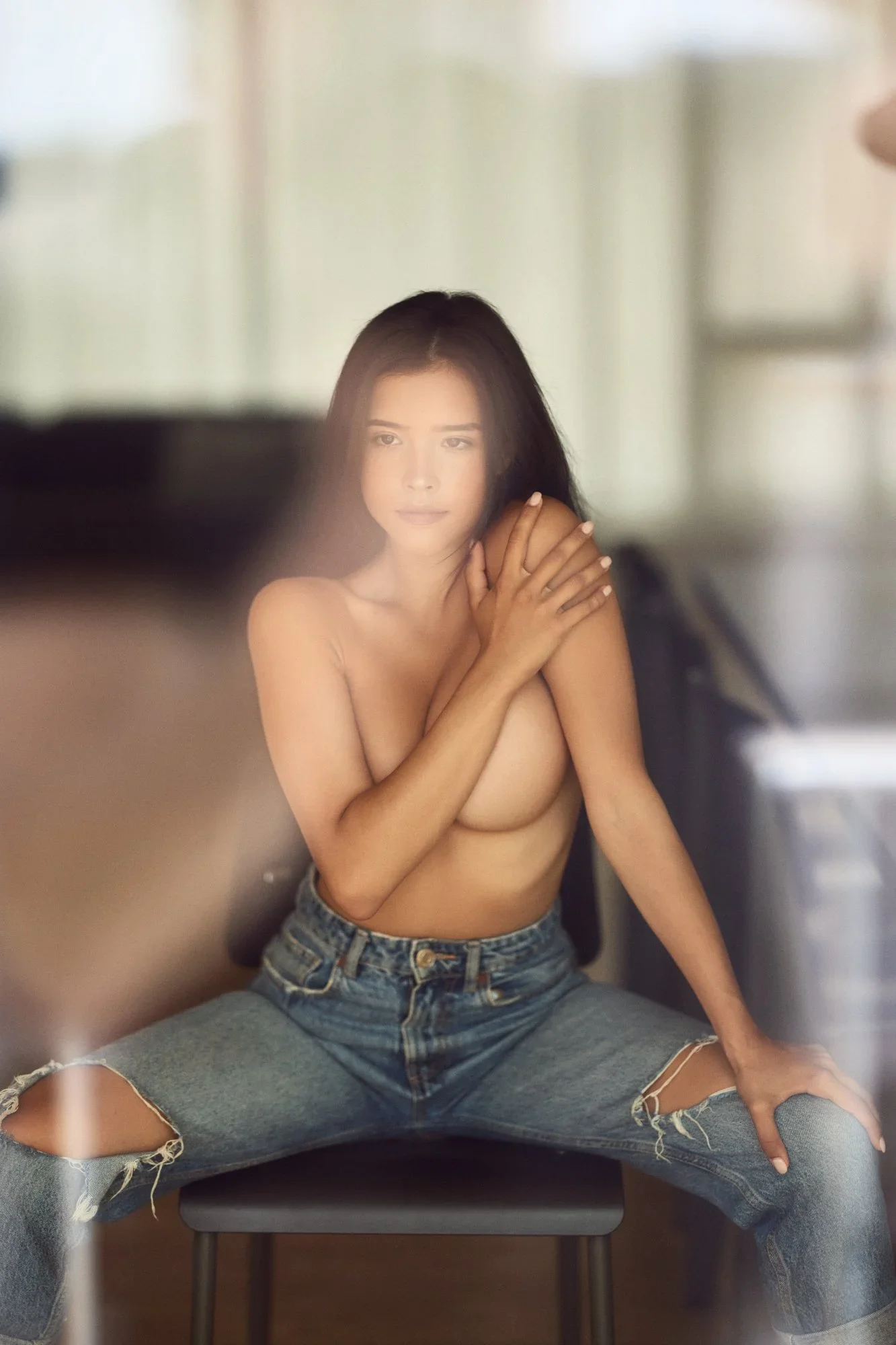
It was different from what I was used to. Clean. Elegant. Simple. But in a way that felt rich, not empty. The women in his photos were not over posed, overly seduced or trying too hard to be sexy. They just were. The lighting was soft but intentional. The compositions were precise but never rigid. There was a calm confidence to it all.
I wanted to take photos like that. So I followed him. And I kept following him. For years.
Fast forward to now, and I am sitting on a call with Joakim, talking about photography, social media, workshops, and how a guy who never really planned on becoming famous somehow ended up with one of the most recognizable styles in the industry.
And during that conversation, I realized something. I will never take photos like Joakim Karlsson. And that is perfectly fine.
(Versión en español abajo ⬇️)
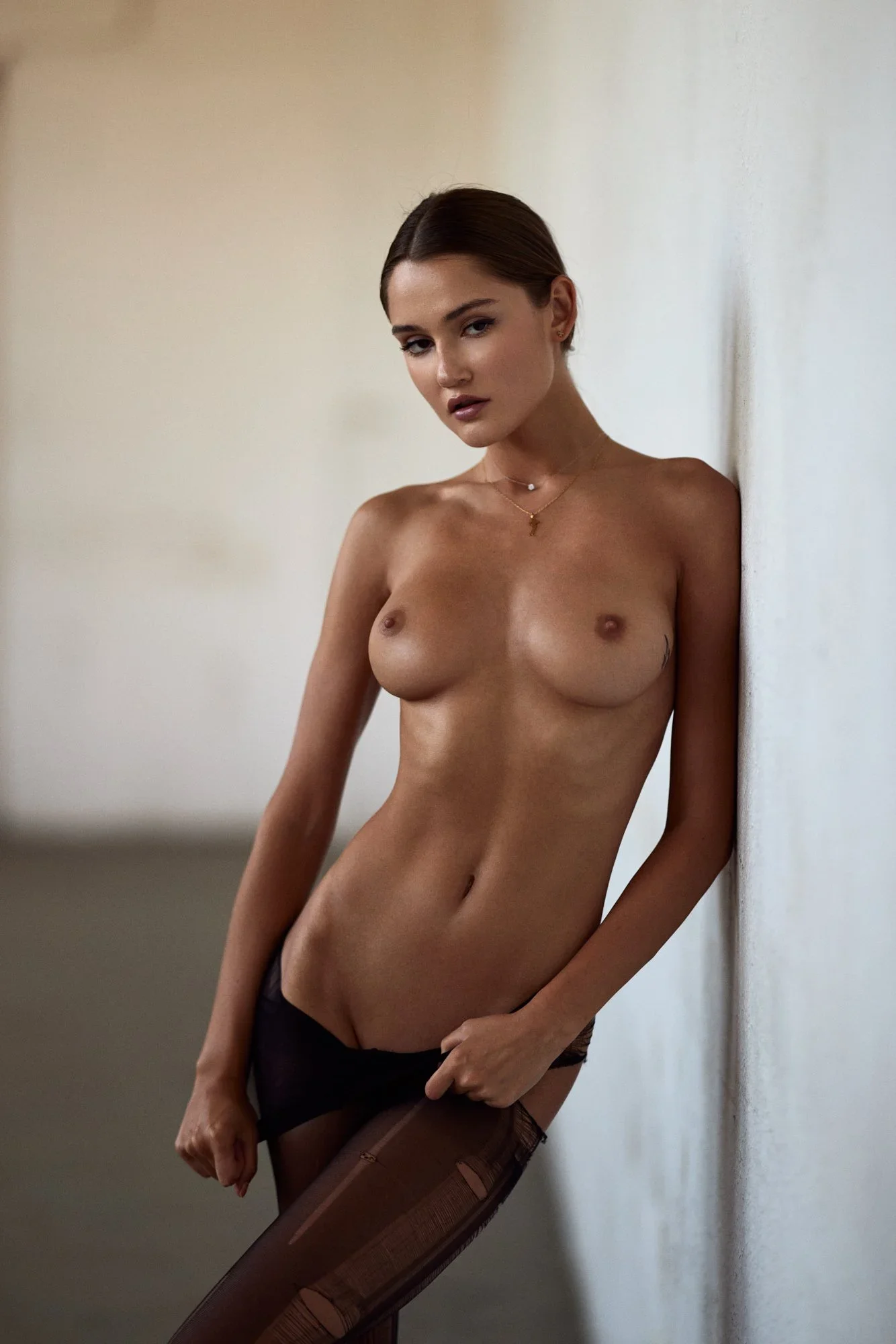
Joakim Karlsson, the man behind the click
Joakim is one of those photographers who lets his work speak for itself. He is not the kind of person constantly posting behind the scenes videos, writing endless essays about his process, or shouting loudly online. He does not need to. His images already say everything.
I started the conversation by asking him what it is that makes his photos so special and recognizable. He answered by talking about one of his most popular images. A black and white photo of a model simply looking into the lens. No grand concept. No elaborate setup.
Just a quiet moment.
I started thinking. Why is this photo special? Why is not everyone making photos like this? And then he explained it to me.
He said, “If it is just a click, why can anyone do it? But that is the thing. What makes a photo is not the click. It is everything before the click. How you talk to the model. The chemistry. The atmosphere in the room. That is what makes a photo.”
That hit me.
Because it is something I have felt myself even if I had not put it into words before. The best photos do not just happen. They are the result of everything that leads up to that one perfect second.
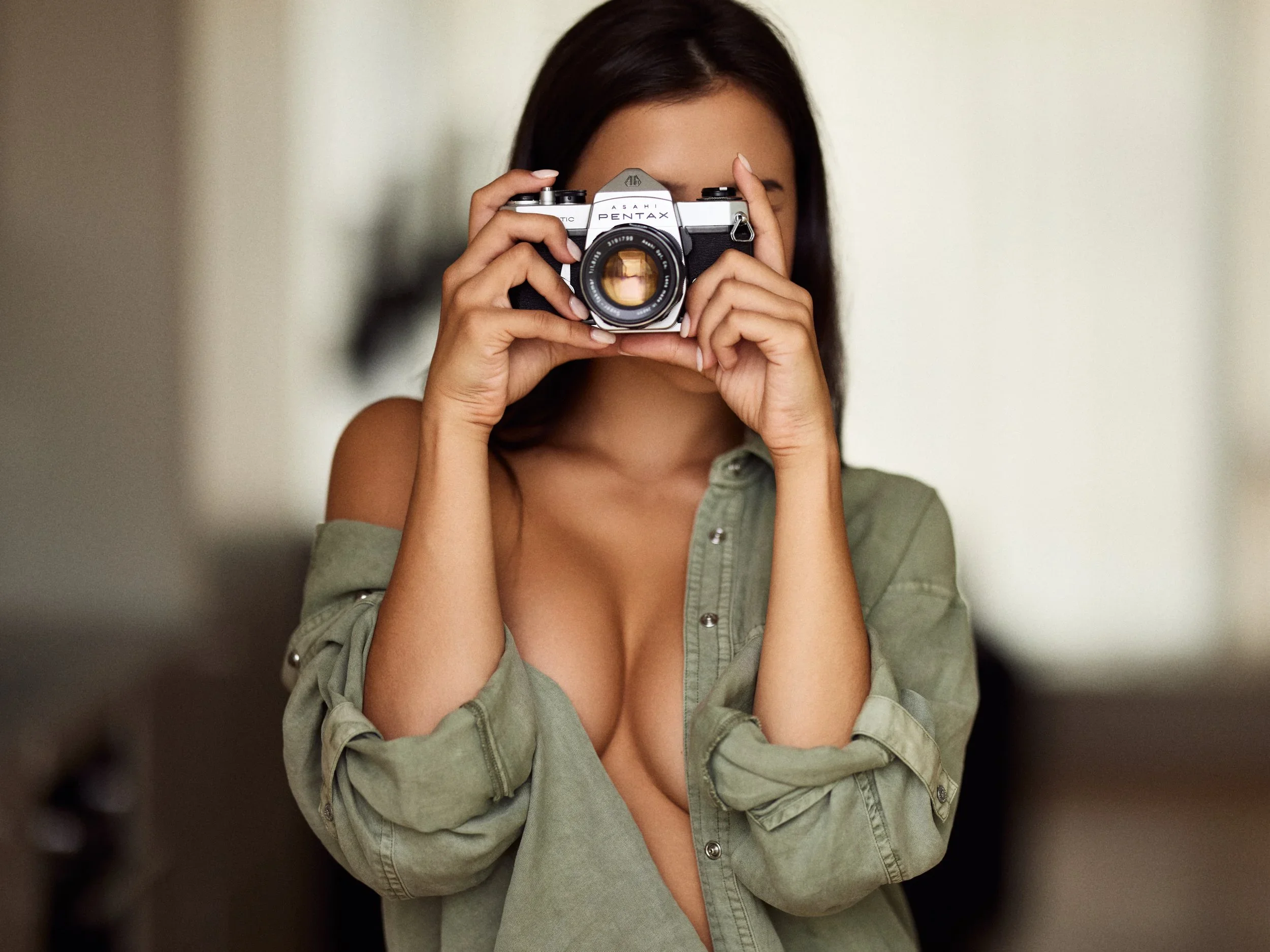
Just keep posting
One of the funniest things about Joakim is that despite his huge following, he never set out to be big on social media.
He told me, “I did not really understand Instagram at first. My first post was just a photo of my camera. Then a selfie. Then some behind the scenes shots with a terrible filter. And I thought, what is this even for?”
But then he noticed another photographer from his city growing fast online. Curious, he asked how he was doing it.
“He told me, just keep posting,” Joakim said. “And I thought, that is bullshit.”
But he tried it anyway. And surprisingly, it worked.
“You post. You get a few likes. Then one day you get a comment from someone you do not know. Then two years later, I had 30,000 followers.”
Then came the viral moments. One good shoot. One well timed post. And suddenly thousands of new followers appeared overnight.
Leaving the nine to five behind
Joakim never planned on becoming a full time photographer. If anything, he was pushed into it by life.
Years ago, he had a regular stable job. Predictable. Safe. Boring. And absolutely unwilling to let him take three days off for a photoshoot. So he took sick days instead. As you can imagine, that did not last very long.
“They did not know exactly what I was doing, but they knew I was into photography,” he told me. “And I realized, okay, this is not working anymore.”
For a while, he tried to balance both worlds. Part time job. Growing photography career. But then came the ultimatum.
They needed him full time.
So he had a choice. Stay safe. Or go all in.
He quit.
“Super scary,” he admits. “I just thought, I hope this is the right choice.”
Looking back, of course it was. But in the moment it was a leap into the unknown. And like every creative path, it came with ups and downs.
But here is the thing. Sometimes you only jump when life leaves you no other option.
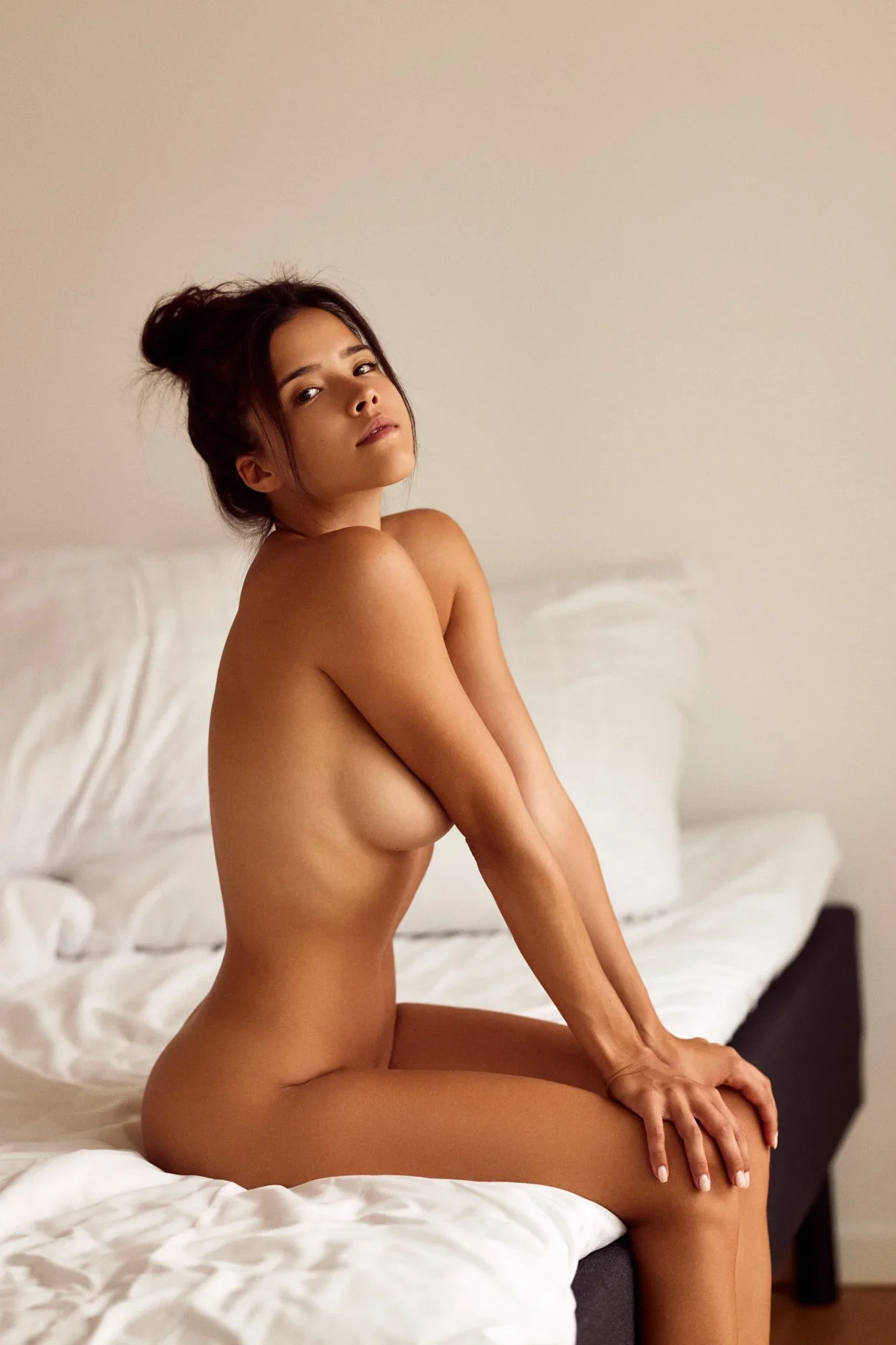
Workshops and imposter syndrome
Joakim never really planned to make money from workshops either. It just kind of happened.
A model suggested the idea. Teach. Shoot. Get paid. Not a bad deal.
“At first I had no idea what happens at a workshop,” he recalls laughing. “But I tried it. And it was great. I could bring in the models I wanted to shoot, make money, and still do what I love.”
But teaching comes with a new problem.
Imposter syndrome.
“You have those days where you look at your own work and think, how did I get away with this?” he admits, laughing.
But here is the truth. People do not pay for settings or camera lectures. They pay for taste. For artistic intuition. For trust.
Some of his students have been coming to his workshops for ten years. Not because they do not know how to shoot. But because they want to learn how he sees.
Why gear does not matter, but taste does
Every beginner photographer loves excuses.
I do not have the right camera. I need a better lens. I need better light.
Joakim calls it what it is.
“I used to think that too. Then I started traveling. And I realized, if I need an assistant and huge lights, I am not going to make it. So I forced myself to work with what I had. Just me. A model. And natural light.”
The result. A signature style.
Sometimes in workshops, he shoots over a participant’s shoulder. Same model. Same place. Same time. Same settings. And yet the photos look completely different.
It is not the camera.
It is your eye. Your connection with the model. Your restraint. Your taste.
Joakim told me something that really stuck with me.
“You can take the same photo in two ways. One is elegant. The other is vulgar. The difference is taste.”
And that is exactly what makes his work stand out. He knows when to stop. He knows what to leave unsaid.

Being judged for shooting nude women
Joakim knows what it is like to be judged. If you are a male photographer who shoots nude women, people will always have opinions. And in Sweden those opinions can be very loud.
“People are even afraid to go to my workshops because they are worried about what others might think,” he told me.
And sometimes the judgment is not even direct. It is just a voice in the back of your mind.
Do people think I am only doing this to be around women?
But then there is another voice.
The honest one.
“Fuck it. I love what I do. And I do not care what anyone thinks.”
He listens to that one.
His long term girlfriend was one of his models. They worked together. Created together. Then they were together for nine years.
But eventually, the world around them became louder than what they had between them.
And the relationship broke.
Not because of them.
But because of everything around them.
It happens more than you would think.
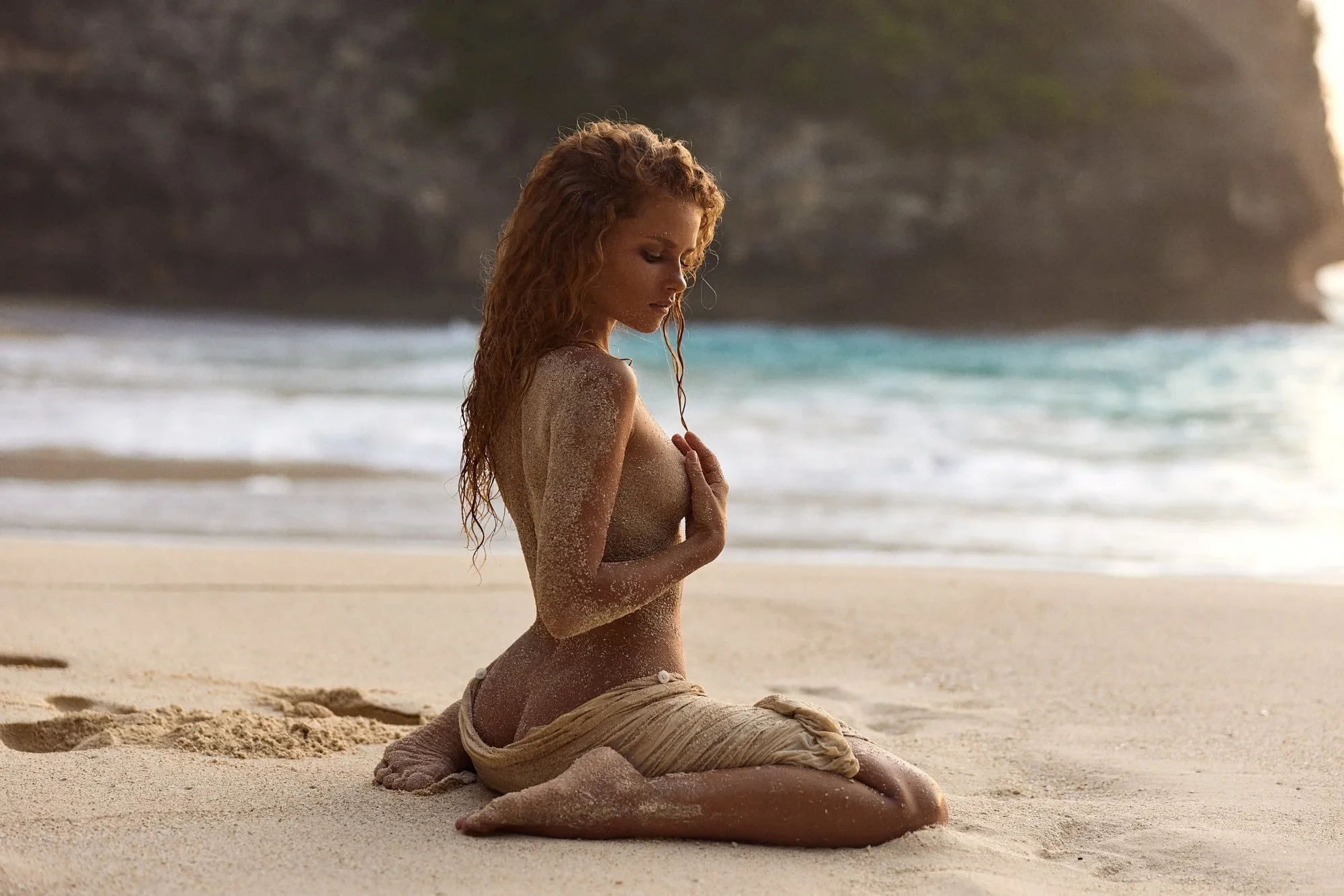
Why photography
After thousands of shoots. After traveling the world. I asked him one final question.
Why do you love photography?
His answer surprised me.
“I used to play music. But I realized I depended on others. I needed people to rehearse. Photography gave me complete control over my creative output. That independence is what made me fall in love with it.”
And honestly. I get that.
Things to remember
Talking to Joakim made me think a lot about my own photography. About what matters. About what does not.
If I had to summarize the biggest lessons, they would be these.
1. The photo is made before you click
It is not about pressing the shutter. It is about everything that leads up to it. The connection. The trust. The light. The atmosphere.
That is the difference between an okay photo and one that feels alive.
2. Sometimes you need to be pushed
We wait for perfect timing. Perfect courage. Perfect conditions.
They do not come.
Joakim was pushed. He had to choose. Security or passion.
He chose passion.
Sometimes life pushes you. And that push is a gift.
3. People will judge you. That is not your problem
If you shoot nude women, people will project their own ideas onto you. They will judge. They will assume.
Let them.
The only people who truly understand your work are the people in it. The models. The artists. The creators.
Everyone else is just guessing.
So will I ever take photos like Joakim Karlsson?
No. And that is okay. Because I will take photos like me. And you will take photos like you.
With lots of love,
Arnold ✌🏻
Español ⬇️
Por qué nunca harás fotos como Joakim Karlsson (y está bien)
Recuerdo la primera vez que vi una foto de Joakim Karlsson. Fue en Instagram, cuando yo acababa de empezar a fotografiar modelos. Todavía estaba descubriendo cosas, jugando con la luz, probando estilos, viendo qué funcionaba y qué no.
Y entonces vi su trabajo.
Era diferente a lo que estaba acostumbrado. Limpio. Elegante. Simple. Pero no vacío. Las mujeres en sus fotos no estaban exageradamente posadas, ni forzadas a parecer sensuales. Simplemente lo eran. La iluminación era suave pero intencional. Las composiciones precisas pero nunca rígidas. Había una calma confiada en todo.
Yo quería hacer fotos así. Así que empecé a seguirlo. Y seguí. Durante años.
Y ahora estaba allí, hablando con él en una videollamada, hablando de fotografía, redes sociales, workshops y de cómo alguien que nunca planeó ser famoso terminó teniendo uno de los estilos más reconocibles de la industria.
Y durante esa conversación entendí algo. Yo nunca haré fotos como Joakim Karlsson. Y eso está perfectamente bien.
Joakim Karlsson, el hombre detrás del disparo
Joakim es uno de esos fotógrafos que deja que su trabajo hable por él. No es el tipo de persona que está constantemente publicando making ofs, escribiendo textos eternos sobre su proceso o gritando su opinión en internet. No lo necesita. Sus fotos ya lo dicen todo.
Empecé preguntándole qué hace que sus fotos sean tan especiales y reconocibles. Y me habló de una de sus imágenes más populares. Una foto en blanco y negro de una modelo simplemente mirando a cámara. Sin gran concepto. Sin montaje complejo.
Solo un momento quieto.
Y entonces pensé. ¿Por qué esta foto es tan especial? ¿Por qué no todo el mundo hace fotos así? Y él me lo explicó.
Me dijo: “Si fuera solo un click, cualquiera podría hacerlo. Pero ese es el punto. Lo que hace una foto no es el click. Es todo lo que pasa antes del click. Cómo hablas con la modelo. La química. La atmósfera en la habitación. Eso es lo que hace la foto.”
Eso me golpeó.
Porque yo mismo lo había sentido, aunque nunca lo había puesto en palabras. Las mejores fotos no simplemente ocurren. Son el resultado de todo lo que pasa antes de ese segundo perfecto.
Solo sigue publicando
Una de las cosas más curiosas de Joakim es que, a pesar de tener una audiencia enorme, nunca intentó volverse grande en redes.
Me dijo: “Al principio ni siquiera entendía Instagram. Mi primera publicación fue solo una foto de mi cámara. Luego una selfie. Luego algunas fotos detrás de cámaras con un filtro horrible. Y yo pensaba, ¿para qué es esto?”
Pero vio a otro fotógrafo de su ciudad crecer muy rápido online. Y le preguntó cómo lo hacía.
“Me dijo, solo sigue publicando,” cuenta Joakim. “Y pensé, eso es una tontería.”
Pero lo intentó. Y funcionó.
“Publicas. Tienes algunos likes. Y un día recibes un comentario de alguien que no conoces. Y dos años después tenía treinta mil seguidores.”
Luego vinieron los momentos virales. Una buena sesión. Un buen post. Y de repente miles de nuevos seguidores.
Dejando atrás el trabajo de nueve a cinco
Joakim nunca planeó convertirse en fotógrafo a tiempo completo. Si algo pasó, fue que la vida lo empujó a eso.
Tenía un trabajo estable. Seguro. Predecible. Y absolutamente incapaz de permitirle tres días libres para una sesión de fotos. Así que empezó a pedir bajas. Ya te imaginas que eso no iba a durar.
“No sabían exactamente qué estaba haciendo, pero sabían que estaba metido en fotografía,” me dijo. “Y pensé, vale, esto ya no funciona.”
Intentó vivir en dos mundos. Trabajo parcial. Fotografía creciendo al lado. Hasta que llegó el ultimátum.
O trabajas aquí a tiempo completo. O no trabajas.
Tenía dos opciones. Seguridad o riesgo.
Renunció.
“Era súper aterrador,” admite. “Solo pensaba, espero estar tomando la decisión correcta.”
Hoy sabe que sí. Pero en ese momento era saltar al vacío. Y como todo camino creativo, con altos y bajos.
Pero a veces solo saltas cuando la vida te deja acorralado.
Workshops e impostor
Joakim tampoco planeó ganar dinero enseñando. Simplemente ocurrió.
Una modelo se lo sugirió. Enseñar. Disparar. Cobrar. Nada mal.
“Al principio no tenía ni idea de qué se hacía en un workshop,” recuerda riendo. “Pero lo probé. Y fue genial. Podía traer a las modelos con las que quería trabajar, ganar dinero y seguir haciendo lo que amo.”
Pero enseñar trae algo nuevo.
El síndrome del impostor.
“Hay días en los que miras tu trabajo y piensas, ¿cómo me salí con la mía con esto?” admite riendo.
Pero la verdad es que la gente no paga solo por configuraciones técnicas. Pagan por gusto. Por intuición. Por visión. Pagan porque confían en él.
Algunos alumnos llevan diez años asistiendo a sus talleres. No porque no sepan fotografiar. Sino porque quieren aprender cómo ve él.
Por qué el equipo no importa, pero el gusto sí
Cada fotógrafo principiante tiene las mismas excusas.
No tengo la cámara correcta. Necesito otro objetivo. Necesito mejor luz.
Joakim lo deja claro.
“Yo también lo pensaba. Hasta que empecé a viajar. Y me di cuenta, si necesito un asistente y luces gigantes, no lo voy a lograr. Así que me obligué a trabajar con lo que tenía. Solo yo. Una modelo. Y luz natural.”
El resultado. Un estilo propio.
A veces en workshops dispara sobre el hombro de un alumno. Misma modelo. Mismo lugar. Misma luz. Mismos ajustes. Y aun así las fotos son completamente distintas.
No es la cámara.
Eres tú. Tu ojo. Tu conexión. Tu contención. Tu gusto.
Y me dijo algo que se me quedó grabado.
“Puedes hacer la misma foto de dos formas. Una elegante. Otra vulgar. La diferencia es el gusto.”
Eso es lo que lo hace único. Saber cuándo parar. Saber qué no mostrar.
Ser juzgado por fotografiar mujeres desnudas
Joakim sabe lo que es ser juzgado. Si eres hombre y fotografias desnudo, siempre habrá opiniones. En Suecia, muchas y fuertes.
“Hay gente que incluso tiene miedo de venir a mis workshops porque les preocupa lo que otros pensarán,” me dijo.
Y a veces el juicio ni siquiera viene directo. Es solo esa voz que te susurra.
¿Pensarán que solo hago esto para estar cerca de mujeres?
Pero hay otra voz.
La honesta.
“Que les jodan. Amo lo que hago. Y no me importa lo que piensen.”
Esa es la que escucha.
Su pareja de largo plazo fue una de sus modelos. Trabajaban juntos. Creaban juntos. Y de repente estaban juntos durante nueve años.
Pero eventualmente el ruido externo fue más fuerte que lo que tenían dentro.
Y la relación se rompió.
No por ellos.
Por todo lo que los rodeaba.
Pasa más de lo que crees.
Por qué fotografía
Después de miles de sesiones. Después de viajar por el mundo. Le hice una última pregunta.
¿Por qué amas la fotografía?
Su respuesta me sorprendió.
“Tocaba música. Pero dependía de otros. Necesitaba gente para ensayar. En fotografía podía crear solo. Tenía control total sobre mi creatividad. Esa independencia fue lo que me hizo enamorarme.”
Y sinceramente. Lo entiendo.
Cosas para recordar
Hablar con Joakim me hizo pensar en mi propia fotografía. En lo que importa. En lo que no.
Si tuviera que resumirlo, sería así.
1. La foto se hace antes de disparar
No es el botón. Es la conexión. La confianza. La luz. La energía.
Eso es lo que diferencia una foto correcta de una que está viva.
2. A veces necesitas que te empujen
Esperamos el momento perfecto. La valentía perfecta. Las condiciones perfectas.
No llegan.
Joakim tuvo que elegir. Seguridad o pasión.
Eligió pasión.
A veces la vida te empuja. Y ese empujón es un regalo.
3. La gente te juzgará. No es tu problema
Si fotografías desnudo, la gente proyectará sus ideas sobre ti. Te juzgarán. Asumirán cosas.
Déjalos.
Las únicas personas que realmente entienden tu trabajo son quienes están dentro. Las modelos. Los artistas. Los creadores.
El resto solo está adivinando.
¿Haré fotos como Joakim Karlsson?
No. Y está bien. Porque yo haré fotos como yo. Y tú harás fotos como tú.
Con mucho cariño,
Arnold ✌🏻